






-
Publisher
J. Ross Publishing
-
Date of Publishing
April 1, 2003
-
Book size
448 pages
-
Format
Hardcover & Kindle
Rating
About the book
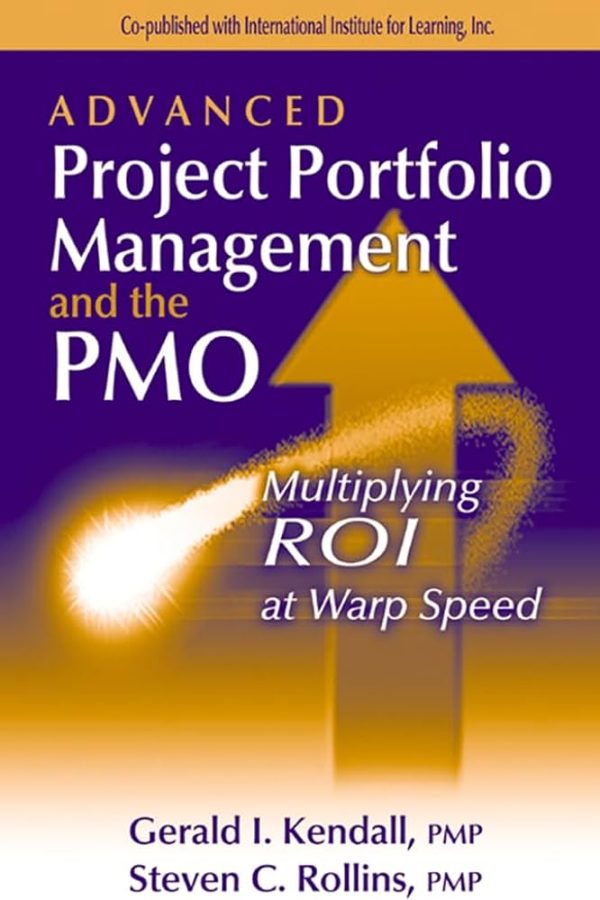
This book is official reference material for the Portfolio Management Professional (PfMP) Credential Examination and serves as a roadmap for achieving high-value enterprise strategies and superior project management results. It covers methods for optimal project selection, faster completion, efficient project portfolio management, and explicit measurement of the PMO to enhance project ROI rapidly.
In the dynamic global economy, the Project/Program Management Office (PMO) plays an important role in implementing effective project management, making this guide a valuable resource to transform your PMO into a value machine and meet evolving organizational needs efficiently.
AIPMO Review
Rating: 7.1 – This book is a testament to the authors’ considerable expertise in PMO and portfolio management, offering a structured and traditional approach to PMO creation that prioritizes project value maximization, an enduring principle in project management. The book is commendably clear and well-organized, with content that is accessible to a broad readership.
While the book is an authoritative source on PMOs as of its publication, it does not extensively address more recent developments such as digitization, Agile, AI, and the evolving impact of outsourcing. The primarily US-centric perspective may not fully capture the diversity of modern global business practices, and areas such as service-oriented PMOs and lifecycle management could benefit from further exploration in future editions.
The authors’ credibility is underpinned by their background and professional network, yet there is room for a more extensive citation framework to underpin the book’s claims, which would be invaluable for readers seeking to validate the content further. Real-world case studies are a highlight, and expanding on these with more depth and integration would enrich the reader’s understanding of the material.
Visually, the book’s graphics are clear, though a more unified design approach could enhance the overall aesthetic and functional appeal. It serves as a valuable historical reference, encapsulating PMO strategies of the early 2000s, and while it may not fully encompass the latest business trends, it remains a foundational resource.
AIPMO 10-point scale
The physical book is well-presented with a visually appealing cover design and layout. The content is in black and white. The typography is clear and readable, even if somewhat outdated in style. The use of images, charts, and graphs is sufficient in conveying information.
The book addresses some of the key challenges and practices in the field of building a PMO. Due to its age, current topics such as digitalization, Agile, AI, and outsourcing implications on the PMO are not covered. Its content source is from the USA and assumes the concepts and findings are globally applicable. Some of the concepts are dated regarding a PMO, such as the definition and configurations. The book does not cover non-delivery PMOs, nor does it cover the lifecycle of a PMO or the concept of a service-oriented PMO. Background assumptions, such as breaking business structures into simplistic notions of function and ‘Supply side’ vs ‘Market side’, may mean little to practitioners used to operating in product-based structures today. However, the focus on delivering the most value from projects – which the authors term as ‘project throughput’ – versus simply policing annual project budgets or concentrating on evolving processes and methodology resonates as strongly as ever.
The authors present ideas in a clear and concise manner, making it easy for readers to understand the concepts. The book is well-organized, with a logical flow of information and content variety that enhances readability. The language used is accessible to a wide range of readers.
The book offers practical advice, tools, and strategies that can be implemented in real-life business situations. It provides actionable insights that readers can apply, but some of the business and PMO concepts are dated, missing key ideas such as product/service-based delivery, business agility, and broader considerations like Environmental and Social Responsibility, which limits its value.
The book takes a production view of PMOs, focusing on portfolio management, the antecedents for effective portfolio management, strategic planning, portfolio selection, and then a process view of PMOs. It is heavily influenced by PMI and the project approach, with references to the PMBOK guide. The building of the PMO is approached more from a general project perspective than from a PMO-specific project perspective.
The book includes case studies and examples to support its content, showcasing real-world scenarios and experiences. However, the variety and depth of case studies and research could be further enhanced and integrated into the text to provide a richer understanding of the concepts presented.
The authors demonstrate credibility in the subject matter, as evidenced by their background and expertise in building portfolios and PMOs. The authors also know many experts in the field and could leverage their knowledge in the construction of the book. There should be more citations to the sources of statements, as there is no way to check their validity.
The book provides an interesting view of PMOs in 2003, but a lot has evolved since then, limiting the value of the book. The book is full of examples of learnings and provides links to plentiful resources, but there are newer books following detailed methodologies designed for PMOs, which provide better advice.
The book includes citations and references to support some of the content. There are many statements that could be strengthened with citations. The depth and rigor of research conducted by the author could be further enhanced to strengthen the overall research quality.
The graphics are simple and understandable, but there is no common consistent approach to the graphic designs.