






Book details
-
Publisher
CRC Press
-
Date of Publishing
September 22, 2010
-
Book size
394 pages
-
Format
Hardcover & Kindle
Rating
About the book
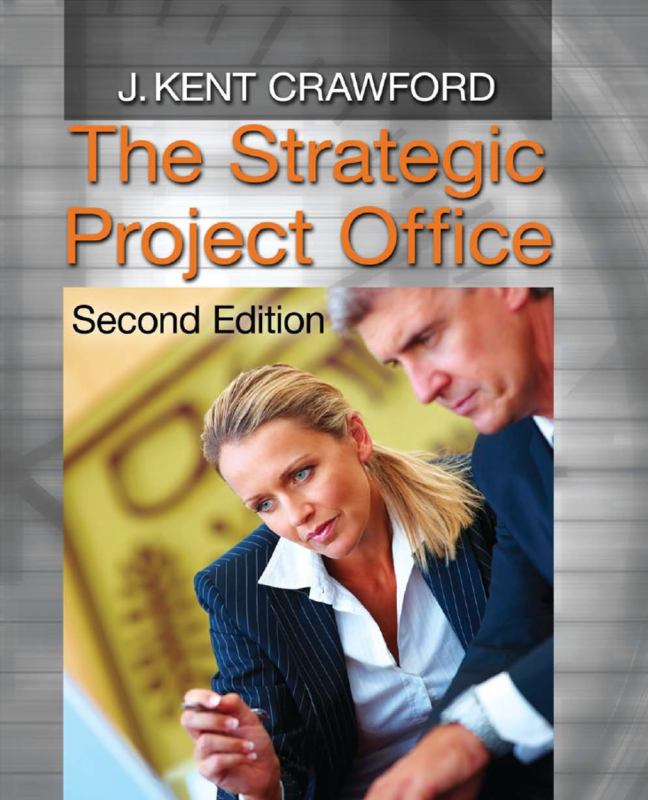
The second edition of this award-winning book provides step-by-step guidance on establishing and maturing a project management office (PMO). Brief and easy to read, this book covers the fundamental domains of PMO expertise, encompassing governance and portfolio management, optimizing resources, navigating organizational change, and measuring performance.
Recipient of the 2001 David I. Cleland Project Management Literature Award by the Project Management Institute, the last edition introduced the concept of PMO as a strategic resource. This updated edition features reporting on cutting-edge research on the status and roles of today’s PMO, highlights best practices, and includes case studies of award-winning PMOs. It delves into the various aspects of planning and implementing the strategic PMO and provides readers with an assessment model for measuring PMO practice maturity.
AIPMO Review
Rating: 5.7 – “The Strategic Project Office” by J. Kent Crawford offers a comprehensive guide to establishing and managing strategic PMOs, targeting project managers, project office directors, their managers, and executives. The book covers essential areas such as governance, portfolio management, resource optimization, organizational change, and performance measurement. Despite its valuable insights and practical examples, the book’s theoretical framework may seem outdated by current standards, lacking integration with agility principles and addressing only six services.
The layout of the book, spanning ten chapters over 394 pages, is clear but hindered by black and white figures, which diminish their effectiveness. The inclusion of colored figures would have enhanced the design quality. Nonetheless, the author’s prominence in project management, particularly in project portfolio management (PPM), lends credibility to the content.
Real-life case studies enrich the reader’s understanding, but a lack of comprehensive overview limits its usefulness. While the book was once considered a valuable resource and earned its place in reference libraries, its relevance in 2024 may be open to question. A later edition with updates to address dated references and incorporate current best practices would be beneficial. Nevertheless, the book’s robust research and scholarly value remain evident through its citations and references, despite their dated nature.
In conclusion, “The Strategic Project Office” offers timeless insights into strategic PMOs but may require supplemental resources to align with contemporary project management practices.
AIPMO 10-point scale
The book is available in both Kindle and hardcover formats, accompanied by a CD containing forms and templates. With a total of 394 pages spanning ten chapters, it presents a professionally published work with a simple yet clear layout. However, the black and white figures lack uniformity in appearance. If the book had included colored figures, it would have enhanced the overall design quality.
The focus of this book aligns closely with the prevailing trends in project management at the time of its writing. However, the underlying theoretical framework may now be considered somewhat dated. Additionally, several aspects of modern PMOs are not adequately addressed, particularly the absence of a connection to agility principles.
The book was originally written for project managers, project office directors, their managers, and executives. It explains how to create a project management center covering four main areas: governance and portfolio management, resource optimization, organizational change, and performance measurement. The author has presented the book’s ideas clearly, with practical examples to help readers understand complex topics.
The book provides useful insights, methodologies, and tools from its time, applied to relevant cases, some of which remain applicable in 2024 when using current best practices. However, due to outdated methodologies and tools, it may offer less assistance in implementing a PMO today. Additionally, the book only describes six services, which may limit its usefulness for readers seeking comprehensive guidance.
At the time of its publication, the book provided valuable insights and a thorough approach to establishing and managing strategic PMOs. Although some of the content may not align with 2024 best practices, the book still offers practical value and relevance even today.
The book includes relevant and well-integrated case studies and examples that significantly enhance the reader’s understanding of the key points. These are real-life case studies.
The author is a prominent figure in the field of project management. He is known for his expertise in project portfolio management (PPM) and has authored several books and articles on the subject. His work has contributed significantly to advancing the practice of project management, particularly in the areas of portfolio management and organizational project management maturity. He has published seven books and is a speaker at conferences.
In the journey of personal growth, this book was considered a valuable resource when it was published and earned a place in many reference libraries. However, if a later edition were to be released, a review would be warranted, especially if it included current best practices and revised outdated theories. In 2024, it might not be the best idea to invest in this book.
The references used in this book are now dated. However, given the age of the book, its citations, references, and evidence of research are robust, reflecting high scholarly value and reliability.
A comprehensive overview is missing. While the book includes relevant and effective figures, they are presented in black and white, which diminishes their ability to convey clarity during analysis and interpretation. Publishing the book with colored figures would have improved the visual elements and facilitated a clearer understanding of the content.