






Book details
-
Publisher
Addison-Wesley Professional
-
Date of Publishing
February 22, 2023
-
Book size
464 pages
-
Format
Paperback & Kindle
Rating

About the book
Organizations invest vast resources in developing new products and services. Yet, too many are poorly conceived, don’t delight (or even satisfy) customers, and fail in the marketplace. The solution is more effective agile product ownership and product management. This book is an expert guide to the behaviors, stances, and practices of world-class agile product development, reflecting deep in-the-trenches experience from world-renowned experts.
Chris Lukassen and Robbin Schuurman introduce powerful tools, ideas, and skills for delivering superior products and services, as well as avoiding pitfalls that prevent you from understanding what customers truly need and want. Learn through a start-to-finish, Scrum-based case study, drawing on concepts the authors created for their breakthrough Scrum.org Professional Scrum Product Owner-Advanced (PSPO-A) training course.
This innovative approach has helped thousands of product owners excel—and it can transform how you create products. It replaces ineffective behaviors with strategies for excellence, stronger customer representation, and clearer connections between values and features. The book emphasizes storytelling, goal-setting, and data-driven decision-making while guiding product owners in innovation, scaling, and collaboration. By improving stakeholder influence and agile teamwork, it empowers product owners to drive greater impact and success.
Product owners, managers, and team leads will find this guide indispensable along with Agile/Scrum coaches, consultants, and executives wanting to generate more value from product management across the organization.
AIPMO Review
Rating: 6.7 – The book Practical Product Management for Product Owners by Chris Lukassen and Robbin Schuurman provides actionable insights, frameworks, and techniques to help product owners navigate challenges and drive successful product development.
The chapters are thoughtfully structured to allow readers first to understand the role of the Product Owner, master key product management skills, and then progress to the application of more complex concepts, such as stakeholder management, innovation strategies, and decision-making processes. Each chapter offers valuable insights, whether through frameworks or practical advice; however, some could benefit from more in-depth, real-world examples to further enhance their applicability.
A notable feature of the book is the Quick Quiz Review, which reinforces learning and helps solidify key concepts at the end of each chapter. This interactive element encourages readers to actively engage with the material, test their understanding, and ensure that the ideas presented are well-integrated and retained. It provides an excellent way to assess comprehension, particularly for those aiming to apply the concepts in real-world product management situations.
Overall, the book presents a balanced blend of theory and practice, focusing on actionable advice that can be applied directly to real-world scenarios. While no groundbreaking new methodologies are introduced, the book effectively refines existing concepts, making it a solid resource for anyone seeking to strengthen their skills in product management. The inclusion of quizzes enhances the learning experience, making this book not only a great reference but also an interactive tool for personal growth.
AIPMO 10-point scale
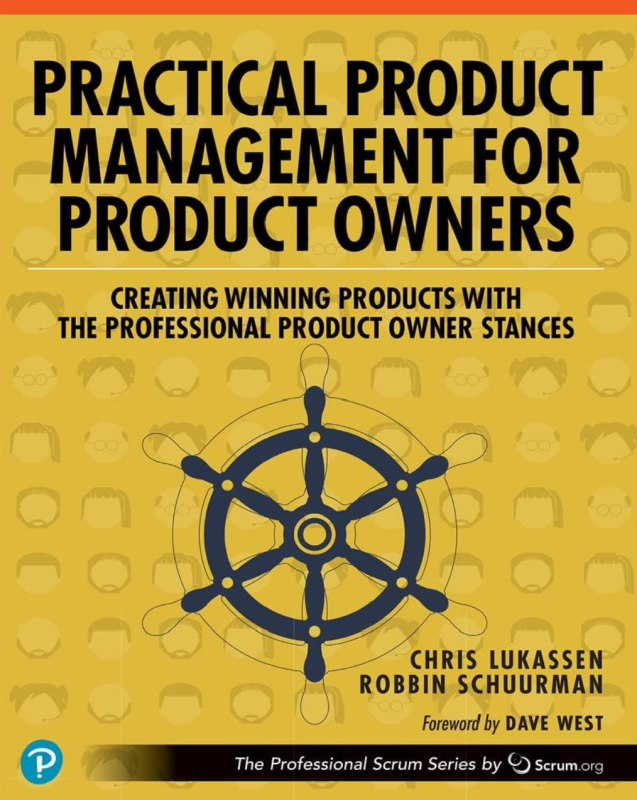
The book’s presentation is functional and clear, though there is room for visual enhancement. The cover design is solid, but it could be more eye-catching for the target audience. The typography is easy to read and accessible, with potential for further refinement. The color scheme is minimal and effective, though it could be more engaging. The Kindle format is well-structured overall, with only a few minor inconsistencies that, if corrected, would result in an even smoother reading experience.
The book is relevant in product management, offering insights and analysis on recent developments in the field. It provides a comprehensive view of practices, ensuring its timeliness and applicability for professionals. While its content has moderate global relevance, it presents perspectives that extend beyond specific regions, offering value to a broader audience. The book also addresses challenges, positioning itself as forward-thinking and likely to remain relevant as the industry continues to evolve.
The structure of the six preferred stances of a product owner is well-organized. The book begins by addressing common misconceptions and introducing the preferred stances, which represent the attitudes and behaviors that product owners adopt in different situations. Each stance is explored in a dedicated section, complete with a summary at the end. This book serves as a valuable reference for product owners, allowing them to revisit specific techniques as needed rather than reading it cover to cover in one sitting. However, occasional complex phrasing and unclear articulation can make comprehension challenging.
The book introduces several frameworks and techniques that are directly applicable to product management. These include methods like Value Proposition Design, Lean Innovation, and Customer Journey Mapping, which guide product owners in developing products that truly meet customer needs. The book also covers Agile Product Development, enabling flexible and iterative product creation. These frameworks provide structured approaches to addressing execution challenges, ensuring that product owners have the tools to succeed at every stage of the product lifecycle.
It provides clear methods for decision-making, such as prioritization techniques, helping product owners make informed, efficient choices. The book also enhances problem-solving capabilities, providing tools for overcoming challenges such as stakeholder conflicts and market fit issues.
The book adds value by refining established knowledge and offering clearer perspectives. Some examples are original, such as the concept of reverse innovation, where products are first developed for emerging markets before being adapted for developed markets. However, many examples are predictable, drawing on well-established practices in product management, such as lean innovation and agile methodologies.
The book includes case studies and examples that support key concepts, but their integration and relevance are inconsistent. While some examples, such as Amazon’s approach to customer-centric innovation, are insightful and help to clarify complex ideas, others lack depth or fail to connect clearly to the book’s arguments. This inconsistency impacts the overall effectiveness of the examples in reinforcing the book’s points. Some case studies are more illustrative, offering real-world applications, while others feel somewhat disconnected, reducing their overall impact on the reader’s understanding of the material. The book would benefit from more cohesive and deeply integrated examples that directly tie back to the core themes of product management.
The authors Chris Lukassen and Robbin Schuurman have significant visibility and recognition. The book’s credibility is reinforced by their active contributions to the field, both through their professional work and educational initiatives. The book’s content aligns with best practices in the field, and the authors’ active engagement in teaching and consulting ensures that the information is not only current but also highly applicable to real-world product management scenarios.
The book provides valuable and actionable insights for personal growth. It provides deep insights into product ownership, offering actionable frameworks, practical advice, and real-world examples. Its content is highly relevant and applicable, equipping readers with the tools necessary to excel in product management. While not revolutionary, the book refines existing practices, making it a valuable resource for both novice and experienced product owners. The authors’ expertise and the inclusion of interactive elements, such as Quick Quiz Reviews, enhance the overall usefulness of the material, ensuring that readers can immediately apply the knowledge gained.
The research, citations, and references are generally thorough and relevant to the subject matter. The book draws on established frameworks, such as Agile methodologies and Lean Innovation, providing well-recognized industry practices. However, the references to case studies and examples sometimes lack depth, and while the book highlights valuable tools, it doesn’t always cite the sources of specific industry examples. For instance, reverse innovation is mentioned as an original concept, but it could benefit from more detailed citations or real-world references to reinforce its applicability. Overall, the book is credible but could be improved by incorporating more diverse, sourced examples to enhance its academic rigor.
Overall, the visuals enhance the presentation by supporting the text and clarifying key concepts. Unfortunately, they are limited to shades of gray. Tables and graphics are generally clear and well-organized, effectively illustrating key concepts, such as product roadmaps and stakeholder management frameworks. These visuals help break down complex ideas into more digestible formats, making it easier for readers to grasp critical information. However, while the visuals are helpful, they are not as frequent or as innovative as they could be. More visual aids throughout the book could further engage readers and solidify the application of concepts in real-world scenarios.