






A method of project management, used especially for software development, that is characterized by the division of tasks into short phases of work and frequent reassessment and adaptation of plans.
Expanded Definition
A project management approach that divides tasks into short phases of work, often called sprints, and involves frequent reassessment and adaptation of plans based on ongoing feedback. Agile aims to deliver small, usable product increments at the end of each sprint, allowing for regular revisions to the project’s direction based on feedback from stakeholders. Agile is not a single methodology; rather, it is best understood as an overarching category or mindset composed of a set of core principles, values, and philosophies for approaching project management and product development.
The Agile Manifesto, created in 2001, established a foundational philosophy—a set of guiding values and principles—rather than defining a strict methodology. As such, Agile is more accurately described as an umbrella concept or broad approach under which specific frameworks or methodologies fit. These frameworks—such as Scrum, Kanban, Extreme Programming (XP), Lean, SAFe, and Disciplined Agile—are concrete implementations that share core Agile values and principles but differ in terms of rules, roles, practices, and specifics of implementation.
To summarize clearly:
✅ Agile: A philosophy or category defined by a mindset, values, and principles.
✅ Agile Methodologies (Scrum, Kanban, XP, etc.): Concrete frameworks or approaches that align with Agile’s values and principles.
Thus, Agile itself is best viewed as the category or conceptual umbrella under which methodologies or frameworks aligned with Agile principles and values reside.
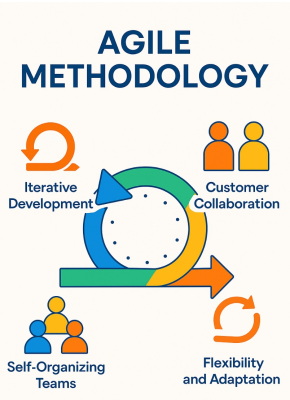
Agile promotes flexibility, collaboration, and continuous improvement. It was designed to address the limitations of traditional Waterfall methods, which followed a rigid, step-by-step process. Agile promotes iterative development, where the project progresses in smaller, manageable phases. The main features of Agile include:
🔁 Iterative Development: Projects are divided into smaller, time-boxed cycles called sprints, each producing a usable product increment.
🤝 Customer Collaboration: Agile projects prioritize customer feedback and interaction throughout the lifecycle, ensuring that the product continuously aligns with user needs.
🔄 Flexibility and Adaptation: Agile welcomes changes in project direction, even late in development, allowing teams to adapt to new insights and shifting market demands.
👥 Self-Organizing Teams: Teams are encouraged to manage their own work, make decisions independently, and collaborate effectively, promoting ownership and accountability.
📢 Transparency and Communication: Regular meetings such as daily standups, sprint reviews, and retrospectives ensure that all stakeholders are aligned and informed throughout the project.
By embracing continuous improvement, Agile allows teams to reflect on their processes after each sprint and adjust to enhance efficiency, quality, and overall project outcomes.
Related Terms
Agile is not a one-size-fits-all approach. Several frameworks and practices have been developed within the Agile family to address different needs and contexts. Here are some key related terms:
-
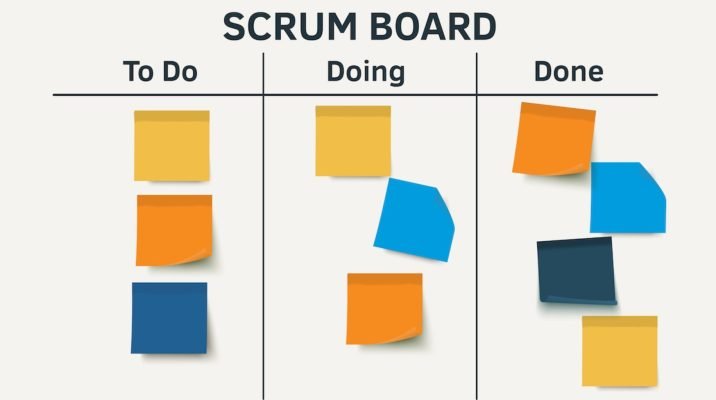
Scrum: A popular Agile framework, Scrum organizes work into sprints, with clearly defined roles (Scrum Master, Product Owner, Development Team) and ceremonies (e.g., Sprint Planning, Sprint Review, Daily Standups).
 Source: Scrum Alliance
 -
Kanban: Kanban visualizes workflow and helps teams manage work in progress by limiting the number of tasks in each stage. It is particularly useful for continuous delivery environments.
-
Lean: Based on Lean manufacturing principles, Lean focuses on delivering value by eliminating waste and optimizing flow. It shares many principles with Agile but emphasizes efficiency and resource management.
-
XP (Extreme Programming): XP emphasizes technical excellence, with practices like Test-Driven Development (TDD), Pair Programming, and continuous integration to improve software quality and team collaboration.
-
Waterfall: A traditional project management approach that contrasts with Agile’s flexibility. Waterfall follows a linear, phase-based structure and is rigid in accommodating changes once the project begins.
-
Sprint: A time-boxed period, typically lasting 1–4 weeks, where a specific set of tasks is completed and delivered as part of the product increment.
-
Product Backlog: A prioritized list of features or tasks that need to be addressed in the project. It evolves as the project progresses, with new items being added and existing ones refined.
-
User Stories: Short, simple descriptions of features from the perspective of the end user, often used to define requirements in an Agile environment.
-
Velocity: A metric used to measure how much work a team completes in a sprint, typically calculated in story points. It helps forecast future sprints and determine team capacity.
-
Continuous Integration: A practice where code is frequently integrated and tested to identify problems early and ensure ongoing progress.
 Source: Scrum Alliance
Common Misunderstandings
❌ Agile is only for software development: Initially developed for software, Agile is now used in many industries, such as marketing, healthcare, and construction.
❌ Agile means no planning: Agile focuses on adaptive planning, where plans are adjusted regularly based on feedback and changing requirements.
❌ Agile means no documentation: Agile emphasizes “just enough” documentation that supports collaboration and the ongoing development process.
❌ Agile means no deadlines: Agile projects still have deadlines, but they are flexible and defined within the context of each sprint.
❌ Agile is unstructured: While Agile emphasizes flexibility, it has a clear framework with defined roles, ceremonies, and processes.
❌ Agile guarantees faster delivery: Agile promotes incremental delivery but does not guarantee speed, focusing instead on delivering high-value features regularly.
❌ Agile means no leadership: Agile encourages self-organizing teams but still requires leadership to provide guidance and remove obstacles.
Historical Context and Evolution
⏳ Agile’s roots lie in the challenges faced by the software industry in the 1990s, particularly with the limitations of traditional Waterfall methods. In 2001, the Agile Manifesto was created by 17 developers, marking the formal birth of Agile. This Manifesto focused on collaboration, customer feedback, and responding to change, setting the stage for iterative and flexible development processes.
Over time, Agile evolved with the introduction of frameworks like Scrum, Extreme Programming (XP), Lean, and Kanban. Each of these frameworks contributed unique practices and approaches, further solidifying Agile as a powerful methodology. The growth of Scaled Agile frameworks like SAFe allowed Agile to be applied in larger organizations, and its principles spread to non-software industries.
Today, Agile continues to evolve with Agile 2.0, which integrates sustainability and broader organizational challenges. It has become a cornerstone of digital transformation, helping organizations remain responsive and competitive in fast-changing environments.
Conclusion
📌 Agile has grown from a simple methodology for software development into a broad philosophy that influences how projects are managed across industries. Its focus on iterative work, customer collaboration, and flexibility has made it a key component in modern project management. By understanding its evolution, key terms, common misunderstandings, and visual aids, teams and organizations can leverage Agile to improve their processes, deliver value, and adapt to change more effectively.