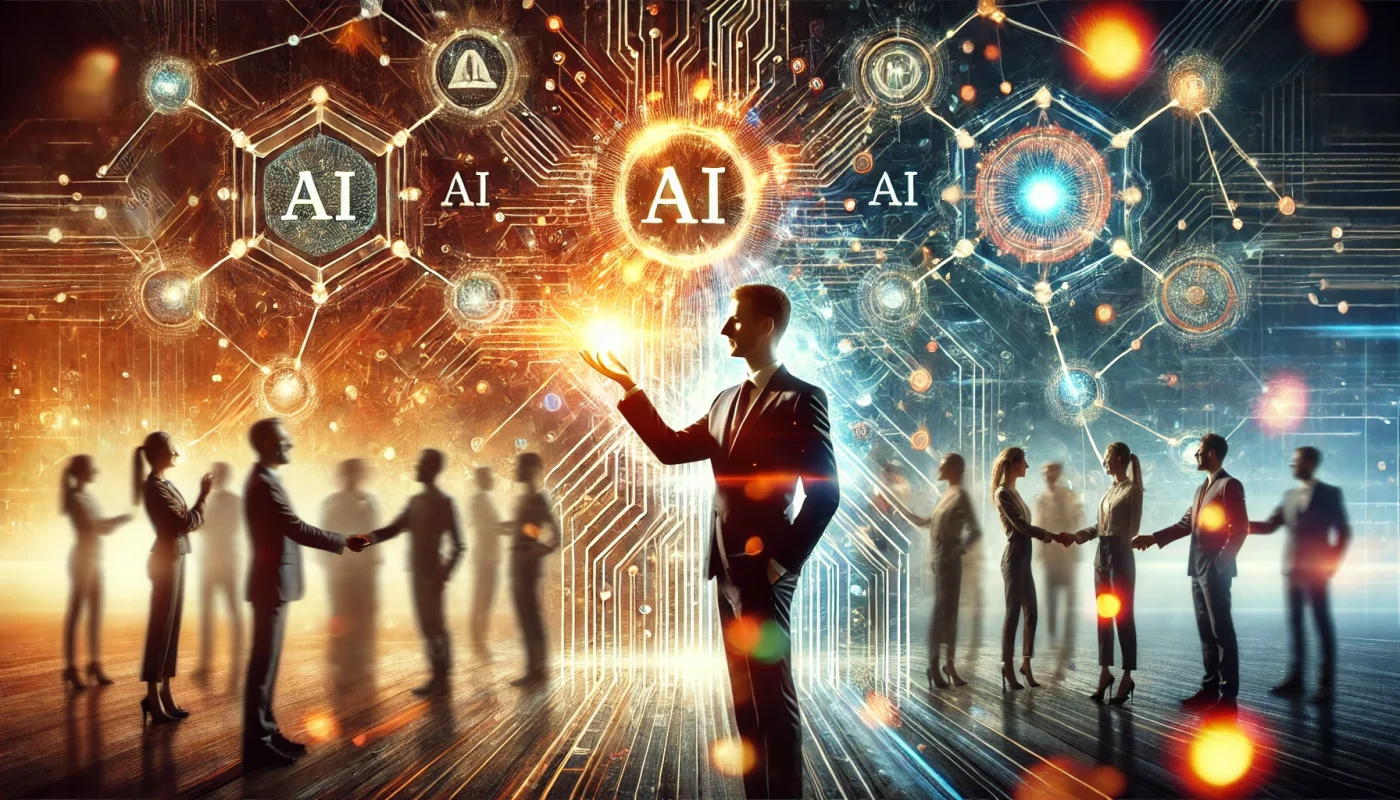
Leadership needs and styles have changed and evolved significantly throughout history. Consistently embracing change and renewing themselves and their organizations have, however, always been qualities of the best leaders. Great leaders serve as inspiring role models. Their methods are adapted, and leadership styles are copied in response to shifting circumstances. Long-term success depends on leaders’ ability to adjust to trends and changes while at the same time juggling everyone around a shared purpose, supportive life values, clear vision, and strong strategy. Such transformative leaders lead – and always have led – with both heart and logic.
We cannot deny that the arrival of artificial intelligence (AI) in our daily lives is a transformative force. It is reshaping leadership and the way we do business. Many leaders today grapple with questions like how AI will change the fundamentals of leadership. Can machines truly lead? What are the implications for our “human” leaders?
While AI offers incredible help and supportive tools, the human touch will always remain at the heart of effective and authentic leadership. We are not machines.
“Great leaders embrace new technology without losing sight of the irreplaceable human element in effective and authentic leadership.”
— Anders BE Eklund
Artificial Intelligence in Leadership
AI is undeniably transforming the business world and significantly impacting leaders in their daily roles. In this new AI-infused environment, leaders have to develop new capabilities—not just in grasping and utilizing vast amounts of data but also in honing interpersonal skills to harness and complement the full power of AI technology in leadership.
AI can handle many routine tasks. It can analyze vast amounts of data and predict outcomes. AI helps automate scheduling, sets reminders, and organizes information efficiently. These capabilities offer numerous benefits, such as faster, more informed decision-making and more efficient administrative flow. Leaders become free to engage more with their teams and better understand their needs. They become “present” leaders who provide guidance and have time to motivate their people.
AI is a Tool, Not a Person
Let’s never forget that AI is a tool, not a replacement for the human elements of leadership. Empathy, compassion, and emotional intelligence are crucial for building trust, inspiring teams, and fostering a positive work environment. These are qualities that machines cannot replicate. Here‘s why:
- Consciousness and Subjectivity
AI systems are complex algorithms without consciousness or subjective experiences. They cannot instigate spontaneous emotions like joy, sadness, or anger, nor can they comprehend the human experience of fear, vulnerability, disappointment, or loss.
- Context and Nuance
AI learning and decision-making rely on collected digital data. While AI can recognize patterns in human behavior, it struggles with and can make mistakes with the subtle nuances of human interaction, culture, and context. AI may process information quickly, but it cannot understand the underlying motivations, desires, and beliefs that drive human behavior.
- Genuine Relationships
AI can simulate human conversation and, based on patterns, provide support, but these interactions lack the authenticity and depth of human relationships. Empathy and compassion are built on trust and connection, which require shared experiences and understanding of another person’s perspective.
Leaders who are relying solely on AI risk disconnecting from their employees’ true emotional and social needs, decreasing morale and productivity. But look at leaders who apply AI to benefit and support their work while engaging personally with their teams, and you will see a more harmonious and motivated workplace.
The Foundation of Successful Leadership is Personal Interactions
Personal interactions are the bedrock of effective and authentic leadership. When leaders lead by example, listen to their employees, show empathy, and provide encouragement, they build strong relationships that foster loyalty and drive performance. AI can provide data and insights about team members, but it cannot replace the genuine human connection from face-to-face conversations or heartfelt words of appreciation, which—let’s not forget—empower creative and innovative minds.
One of the most valuable aspects of leadership is inspiring and motivating others. This often stems from a leader’s passion, vision, and personal stories. While AI can offer data-driven insights, it is the leader’s job to turn those insights into meaningful actions that resonate with their team and goals. Understanding individual team members’ aspirations, fears, and motivations requires human insight that AI can possibly inform about but not fully grasp or utilize.
Successful leaders embrace technology without losing sight of the human element. They use AI to enhance their effectiveness, not to replace their humanity.
Conclusion
We live in an AI-assisted world. Leaders must remember that technology should enhance human qualities, not diminish them. AI is an incredible tool that can significantly empower leadership, but the fundamental human touch and element will always be at the core of successful leadership.
Leaders must ensure AI is used responsibly and transparently, protecting the business and the employee’s privacy by making ethical decisions about how to use AI. Trust is vital in leadership; any misuse of AI can quickly erode it.
The future of leadership lies in blending AI’s capabilities with the irreplaceable powers and value of personal connections. By maintaining this balance, leaders can lead more effectively, build stronger teams, and create a more positive and productive workplace.
Dear Leaders, this is a new and glorious era.